Die Verbindung zur Database hat es nicht gelungen...!!!
Jakarta
Hallo, I am AOUX
As a tour guide, I have a good mix of expertise and interpersonal skills when it comes
to interacting with tourists. I research the Indonesian culture, traditions, and attractions
of the interesting location you want to visit. With these steps, I can improve my skills
as a tour guide and allow my passengers to experience an unforgettable journey.
1. The Capital City
Jakarta is the capital and largest city of Indonesia. It is located on the island of Java
and has a population of over 10 million people, making it one of the most populous cities
in the world.
Jakarta is a bustling metropolis with a rich cultural heritage and a diverse population.
It is the political, economic, and cultural center of Indonesia and is home to many of
the country's government institutions, financial institutions, and cultural landmarks.
One of the most notable landmarks in Jakarta is the National Monument, a towering monument
that commemorates Indonesia's struggle for independence. Other popular attractions in
Jakarta include the Istiqlal Mosque, the largest mosque in Southeast Asia, the Jakarta
Cathedral, the historic old town of Kota Tua, and the Thousand Islands, a group of
islands located off the coast of Jakarta.
Jakarta is known for its vibrant nightlife, with numerous bars, clubs, and restaurants
catering to a wide range of tastes and preferences. The city is also famous for its
street food, with many vendors selling traditional Indonesian dishes such as nasi goreng,
satay, and gado-gado.
However, Jakarta also faces numerous challenges, including traffic congestion, air
pollution, and issues related to poverty and inequality. Despite these challenges,
the city continues to grow and thrive, with a dynamic and innovative spirit that
reflects Indonesia's vibrant culture and spirit of resilience.
Glossary :
1. traffic congestion = der Stau, kemacetan lalu lintas.
2. vibrant culture = budaya yang bersemangat.
3. inequality = ketimpangan
4. spirit of resilience = semangat ketahanan
2. Number of the vehicle in Jakarta
According to the Jakarta Transportation Agency, as of 2019, there were around 14
million registered vehicles in Jakarta, which includes motorcycles, cars, trucks,
and buses. The number of vehicles in Jakarta is expected to continue to grow,
which poses a significant challenge to the city's transportation infrastructure
and contributes to issues such as traffic congestion and air pollution.
3. Rivers in Jakarta
There are several rivers that flow through Jakarta. Here are some of the main ones:
1. Ciliwung River: This is the largest river that flows through Jakarta and was also one of
the most polluted. It runs from Bogor in West Java to the Java Sea in Jakarta. 2. Pesanggrahan River: This river flows through South Jakarta and eventually empties into
Jakarta Bay. It was also heavily polluted due to industrial and residential waste. 3. Sunter River: This river is located in North Jakarta and flows into Jakarta Bay. It was
also known for its high levels of pollution. 4. Krukut River: This small river flows through West Jakarta and is a tributary of the
Ciliwung River. 5. Angke River: This river is located in West Jakarta and flows into Jakarta Bay. It was
also heavily polluted due to industrial and residential waste.
Glossary :
1. tributary = anak sungai.
4. Problem Solving of Floods in Jakarta
Floods are a recurring problem in Jakarta, and the city has been taking several steps to
mitigate the impact of floods. Here are some of the measures that have been implemented:
1. Building retention ponds: Retention ponds are built to capture excess water during heavy
rainfall. These ponds can store water temporarily and gradually release it into rivers
or drainage systems.
2. Developing waterways: The government is working to improve the city's waterways, including
dredging and widening rivers and constructing new canals to divert water.
3. Improving drainage systems: Jakarta has a complex network of drainage systems,
including underground tunnels and surface channels. The city is working to improve the
capacity and maintenance of these systems to better handle heavy rainfall.
4. Managing waste: Improper waste disposal can clog drainage systems and worsen flooding.
Jakarta has been implementing waste management strategies, including recycling and composting,
to reduce the amount of waste that ends up in rivers and canals.
5. Enhancing public awareness: Educating the public about the importance of proper
waste management, reducing plastic usage, and protecting waterways can help to
reduce the impact of floods.
6. Implementing green infrastructure: Jakarta is also implementing green infrastructure
projects, including the creation of green roofs, rain gardens, and parks, which
can help to absorb rainwater and reduce runoff.
The flood problem in Jakarta is complex and requires a multifaceted
approach to solve. The city needs to continue to invest in infrastructure and
public education to mitigate the impact of floods and protect its citizens.
Glossary :
1. recurring problem = masalah berulang.
2. retention pond = kolam penahan
3. dredging and widening = pengerukan dan pelebaran
4. to divert water = mengalihkan air
5. to clog = menyumbat
5. Jakarta will be no longer the capital city of Indonesia
In August 2019, the Indonesian government announced that they would be moving the
capital city from Jakarta to a new location in East Kalimantan, which is located on
the island of Borneo. The new city is called the "Indonesian Capital City" or IKN in
Indonesian (Ibu Kota Negara).
The decision to move the capital was made due to a variety of reasons, including
Jakarta's vulnerability to flooding, its severe traffic congestion, and the fact
that it is sinking at a rate of around 25 centimeters per year due to groundwater
extraction and other factors.
The new capital city is expected to be built on a 180,000-hectare site in the
district of North Penajam Paser and the district of Kutai Kartanegara, with
construction set to begin in 2021. The government has estimated that the move
will cost around 466 trillion rupiahs (approximately $34 billion USD)
over the next decade.
The move to IKN is expected to take around 10 years, and during this time
Jakarta will remain the country's capital. However, the government has
already begun to take steps to reduce the city's burden, such as moving some
government offices and ministries to other parts of the country.
Glossary :
1. vulnerability to flooding = kerentanan terhadap banjir
2. severe = berat, parah
6. Income per Capita in Jakarta
According to the latest data from the Central Bureau of Statistics of Indonesia,
the Gross Regional Domestic Product (GRDP) per capita of Jakarta in 2020 was
approximately 383.6 million rupiahs, which is equivalent to around $26,000 USD.
It is important to note that this figure is based on the GRDP of Jakarta,
which includes not only income from individual residents but also income
generated by businesses and other institutions operating within the city.
If you are asking specifically about the income per capita of individual
residents of Jakarta, the average monthly income per capita in the city was
approximately 5.87 million rupiahs in August 2021, or around $406 USD.
However, it's worth nothing that income levels can vary significantly depending
on factors such as education level, occupation, and industry.
7. Are there homeless people in Jakarta? And how much?
Yes, there are homeless people in Jakarta, the capital city of Indonesia. However,
it is difficult to determine an exact number of homeless people in Jakarta as there is
no official count of homeless individuals. The number of homeless people in Jakarta is
estimated to be in the thousands, with many living on the streets, in parks,
or in makeshift shelters.
The issue of homelessness in Jakarta is complex and multifaceted, with factors
such as poverty, unemployment, lack of affordable housing, and natural disasters
contributing to the problem. The Indonesian government and non-governmental
organizations have implemented various programs and initiatives to address homelessness
in Jakarta, such as providing temporary shelters, job training, and social services
to homeless individuals. However, more needs to be done to effectively tackle this
issue and provide sustainable solutions for the homeless population in Jakarta.
8. History of Jakarta
Jakarta is the capital and largest city of Indonesia, located on the northwest coast
of the island of Java. The area has a long and complex history, with evidence of human
habitation dating back to at least the 4th century BC.
In the 5th century, the area was ruled by the Hindu-Buddhist Kingdom of Tarumanagara.
This was followed by the Sunda Kingdom in the 7th century, which was conquered by the
Hindu-Buddhist Kingdom of Pajajaran in the 14th century.
In the early 16th century, the area was conquered by the Islamic Sultanate of Demak,
which was followed by the Sultanate of Banten in the late 16th century. In 1619, the
Dutch East India Company established a trading post in the area and took control of
the region from the Sultanate of Banten.
Under Dutch colonial rule, Jakarta became an important center of trade and commerce.
The city was known as Batavia and became the capital of the Dutch East Indies in 1942.
During World War II, Jakarta was occupied by the Japanese and renamed as Jakarta.
Following Indonesia's independence in 1945, Jakarta became the capital of the newly
formed Republic of Indonesia. The city has since undergone significant development
and expansion, becoming a major political, economic, and cultural center in Southeast Asia.
Today, Jakarta is a bustling metropolis with a population of over 10 million people.
Despite the city's rapid growth and development, Jakarta continues to face a number
of challenges, including traffic congestion, pollution, and socioeconomic inequality.
9. Kota Tua Batavia
Kota Tua Batavia, also known as Old Town Jakarta, is a historic area located in the
heart of Jakarta, the capital city of Indonesia. The area is known for its Dutch colonial
architecture, with many buildings dating back to the 17th century.
The history of Kota Tua Batavia can be traced back to the 16th century when the
area was known as Sunda Kelapa, a bustling port city. In the 17th century, the
Dutch East India Company took control of the area and established Batavia as the
capital of their colony in the region.
During the colonial period, many impressive buildings were constructed in the area,
including the Jakarta History Museum (formerly known as the Batavia City Hall),
the Bank Mandiri Museum (formerly known as De Javasche Bank), and the Wayang Museum
(formerly known as the Old Dutch Church).
Today, Kota Tua Batavia is a popular tourist destination, with visitors coming to
explore the area's rich history and admire the beautiful colonial architecture.
The area is also home to many cafes, restaurants, and shops, making it a great
place to relax and enjoy the ambiance.
Despite its historical significance, the area has faced challenges such as deterioration,
and preservation and restoration efforts are ongoing. However, Kota Tua Batavia
remains an important cultural landmark and a testament to Indonesia's colonial past.
Glossary :
1. deterioration = kemerosotan
10. Museum Fatahillah
Museum Fatahillah, also known as Jakarta History Museum, is a museum located in the Old
Town (Kota Tua) area of Jakarta, Indonesia. The museum is named after Fatahillah, the
commander who conquered the city of Sunda Kelapa and renamed it Jakarta in 1527.
The museum is housed in the former city hall of Batavia, which was built during the
Dutch colonial era in the 18th century. The building was completed in 1710 and served
as the administrative center of the Dutch East India Company in Jakarta.
Today, the Jakarta History Museum houses a vast collection of artifacts and historical
items related to the city's rich history, including ancient maps, traditional clothing,
ceramics, and old photographs. The museum's displays also showcase the city's role
as a trading hub, as well as the impact of colonialism and the struggle for independence.
Visitors to the museum can explore the various exhibition rooms, which are organized
thematically, and learn about Jakarta's past through informative displays and interactive
exhibits. The building itself is also a fascinating example of colonial architecture,
with its grand hallways, ornate pillars, and spacious courtyards.
In addition to the exhibits, the museum also hosts cultural events, workshops,
and performances throughout the year, making it a popular destination for tourists
and locals alike.
Glossary :
1. spacious = luas
11. Museum Wayang
Museum Wayang Jakarta is a museum located in Jakarta, Indonesia that showcases various
traditional puppets from Indonesia and other parts of the world. "Wayang" is a Javanese
term that refers to traditional shadow puppetry and puppet shows in Indonesia.
The museum has a vast collection of more than 4,000 wayang puppets, including leather
puppets, wooden puppets, and other types of puppets. It also has a collection of
traditional wayang kulit, which are shadow puppets made of leather that are used
in traditional Javanese and Balinese puppet shows.
Apart from the wayang puppets, the museum also displays other artifacts related to
traditional Indonesian puppetry, such as gamelan musical instruments, traditional masks,
and costumes. The museum also holds occasional puppet shows, workshops, and other events
related to traditional puppetry.
Museum Wayang Jakarta is a popular destination for tourists and locals alike who are
interested in Indonesian culture and history. It is located in the Old Town
(Kota Tua) area of Jakarta and is open to the public every day except on Mondays.
Glossary :
1. puppetry = pedalangan
2. a vast collection = koleksi yang sangat banyak
12. The symbole of Gunungan and its meaning
Gunungan is a symbol in Javanese culture that represents the universe, life, and
the balance between good and evil. It is often depicted as a mountain-like structure
with a tree or a serpent coiled around it. Gunungan is commonly used in wayang kulit,
a traditional Javanese puppetry performance that tells stories of ancient epics and myths.
In wayang kulit, Gunungan serves as a visual aid to the storyteller, as well as a
symbol of the story's overarching themes. The tree on top of Gunungan represents
life and growth, while the serpent coiled around it symbolizes the balance between
good and evil. Gunungan is also seen as a representation of the universe, with the
mountain-like structure representing the physical world, and the tree and serpent
representing the spiritual and moral dimensions.
The use of Gunungan in wayang kulit performances is meant to remind the audience of the
importance of maintaining balance and harmony in life. It is a symbol that encourages
individuals to strive for a balanced life that includes both physical and spiritual
well-being, and to recognize the importance of good versus evil in maintaining
that balance.
Glossary :
1. a serpent coiled around it = seekor ular melilitnya
2. a vast collection = koleksi yang sangat banyak
3. that encourages individuals to strive for a balanced life = yang mendorong
individu untuk mengupayakan kehidupan yang seimbang
13. The Hermes God Statue in Kota Tua Jakarta
The Hermes God Statue in Kota Tua Jakarta is a bronze statue depicting the Greek
god Hermes, also known as Mercury in Roman mythology. The statue is located in
Fatahillah Square in Jakarta's old town area, also known as Kota Tua.
The statue was a gift from the Greek government to the Indonesian government in 1962
to commemorate the diplomatic relationship between the two countries. The statue was
crafted by Greek sculptor, Ioannis Zongolopoulos.
Hermes is depicted in the statue holding a caduceus, a winged staff with two serpents
coiled around it, which is a symbol of commerce and negotiation. The statue stands at
a height of 3.5 meters and is mounted on a 7-meter-high pedestal. It has become a
popular attraction for visitors to Jakarta's old town area.
In addition to its cultural significance, the statue has also been the subject
of controversy. Some locals have criticized the statue for its lack of relevance
to Indonesian culture and history. Nevertheless, it remains an important
landmark in Jakarta's old town and a testament to the historical and cultural
ties between Greece and Indonesia.
Glossary :
1. a caduceus = seorang lambang kedokteran
2. a 7-meter-high pedestal = alas setinggi 7 meter
3. Nevertheless = namun demikian
14. The Cannon Si Jagur
The cannon in front of the Museum Fatahillah in Jakarta is known as the "Si Jagur"
cannon. It is a Dutch-made cannon that was used by the Dutch East India Company (VOC)
during the colonial period in Indonesia.
The Si Jagur cannon was manufactured by the VOC in the 18th century and was used as
part of the defenses of Batavia (now Jakarta). It was placed on a fortification called
"Benteng Kasteel," which was located near the present-day Museum Fatahillah.
The cannon was named "Si Jagur" because of the sound it made when fired, which was
said to resemble the sound of thunder ("jagur" in the local language). It was also
known as the "Lion Cannon" because of the lion's head design on the barrel.
After Indonesia gained independence from the Netherlands in 1945, the Si Jagur
cannon was preserved as a historical artifact and placed in front of the Museum
Fatahillah, which is housed in the former town hall of Batavia. Today, the cannon
serves as a symbol of Jakarta's colonial past and is a popular tourist attraction.
Glossary :
1. a fortification = sebuah benteng
15. Batavia Cafe
The area of Kota Tua Jakarta was once the center of the colonial city of Batavia during
the Dutch East Indies era. The building that currently houses the Batavia Cafe was
originally built in 1805 as the residence of a Dutch official named J. A. van Braam .
In the early 19th century, the building was transformed into a social club for high-ranking
Dutch officials known as the Concordia Society. The Concordia Society was a place for
the Dutch elite to socialize, dine, and hold events.
During the Japanese occupation of Indonesia in World War II, the building was used as
the office of the Japanese newspaper Asia Raya. After Indonesia gained its
independence from the Dutch in 1949, the building was used for various purposes,
including as a bank and an art gallery.
Today, the building is known as the "Gedung Batavia" or "Batavia Building," and it is
a popular tourist attraction in Kota Tua Jakarta. The Batavia Cafe, located on the
ground floor of the building, serves as a reminder of the building's colonial past
and attracts visitors who are interested in experiencing a piece of Jakarta's history.
16. There is an old building in front of the museum Fatahillah Jakarta, that was probably
used as a post office in the colonial era. What was it actually?
The building you are referring to is likely the former Batavia Telefoon Centrale (BTC),
which was a telephone exchange building during the colonial era in Jakarta, Indonesia.
It was built in 1928 and is located across from the Fatahillah Museum in the Old Town
(Kota Tua) area of Jakarta.
Although the building was not originally a post office, it played an important role in
communication during the colonial period. The BTC was used to connect telephone lines
throughout the city and served as a hub for communication between the Dutch colonial
government and the public.
Today, the BTC building has been renovated and houses various shops and cafes, and is
a popular destination for tourists visiting Jakarta's Old Town area.
17. Beos Station
The oldest train station in Jakarta is Kota Station, also known as Batavia Zuid Station.
It is located in the Old Town (Kota Tua) area of Jakarta and was built in 1873 during the
Dutch colonial era. The station originally served as a hub for the railway lines
connecting Jakarta with nearby towns and cities, as well as serving as a transport
hub for goods and people. Today, Kota Station still operates as a major train station
in Jakarta, serving both local and long-distance trains. It is also a popular tourist
attraction, with its colonial architecture and historical significance.
18. China Town in Jakarta
Chinatown in Jakarta is known as "Glodok," and it is one of the oldest and largest
Chinatowns in Indonesia. Located in West Jakarta, Glodok has a long and rich history
dating back to the 17th century when the Dutch East India Company established a trading
post in the area.
Today, Glodok is a bustling district that is home to many Chinese businesses, shops, and
restaurants. Visitors can find everything from traditional Chinese herbal medicine shops
to modern electronics stores, and there are many street vendors selling a wide variety
of food and drinks.
One of the most popular attractions in Glodok is the Petak Sembilan market, which is a
traditional wet market that sells a wide range of fresh produce, meat, and seafood.
Other notable landmarks in the area include the Vihara Dharma Bhakti temple, the oldest
Chinese temple in Jakarta, and the Glodok Plaza shopping mall.
Overall, Glodok is a fascinating and vibrant neighborhood that offers a unique blend of
Chinese and Indonesian cultures, making it a must-visit destination for anyone interested
in exploring Jakarta's rich history and diverse cultural heritage.
19. Weltevreden
Weltevreden is a historic district located in Jakarta, Indonesia. It was once the seat of
the Dutch colonial government in Indonesia, and is now known as the Menteng area of Jakarta.
The name "Weltevreden" is derived from Dutch, meaning "well-satisfied" or "content". It was
chosen by the Dutch East Indies government in the late 19th century as a reflection of the
peaceful and prosperous nature of the area.
During the colonial era, Weltevreden was the center of government and commerce in Jakarta.
Many of the city's most important buildings and institutions were located there,
including the presidential palace, the Supreme Court, and the Dutch East Indies
Company headquarters.
Today, the Menteng area of Jakarta, which includes the former Weltevreden district, is
known for its beautiful colonial-era architecture, wide boulevards, and green spaces.
It remains an important cultural and commercial hub in the city, with many upscale shops,
restaurants, and hotels.
Glossary :
1. upscale shops = toko kelas atas
20. Istana Merdeka
Istana Merdeka is the official residence of the President of the Republic of Indonesia.
It is located in Jakarta, the capital city of Indonesia. The palace is situated in the
center of Jakarta, near the National Monument and the Merdeka Square.
The Istana Merdeka was built during the Dutch colonial period in the 19th century and
was originally called the Paleis te Koningsplein. After Indonesia gained independence
from the Netherlands in 1949, the palace was renamed Istana Merdeka, which means
Palace of Freedom.
The Istana Merdeka is not open to the public, as it is used for official state
functions and events. However, visitors can view the palace from outside the gates
and take photographs of the impressive architecture and beautiful gardens.
The Istana Merdeka is a grand colonial-style palace with a central dome and a clock tower.
It is surrounded by spacious gardens that are beautifully landscaped with lush trees,
plants, and flowers. The palace is also home to a museum that displays a collection of
gifts from foreign heads of state to the Indonesian president.
The Istana Merdeka is an important symbol of Indonesia's history and sovereignty.
It has played a significant role in the country's political and social development
over the years. The palace has been the site of many important state functions and events,
including the inauguration of Indonesia's first president, Sukarno, and the handover
of power from President Suharto to President BJ Habibie in 1998.
The palace is heavily guarded by security personnel and is equipped with modern
surveillance technology to ensure the safety and security of the president and his family.
The Istana Merdeka is a fascinating place to visit for anyone interested in
Indonesian history and politics, but it is important to remember that it is a
working presidential palace and is not open to the public for tours or visits.
Glossary :
1. lush trees = pepohonan yang rimbun
2. modern surveillance technology = teknologi pengawasan modern
3. to ensure = memastikan
21. The Istiqlal Mosque
The Istiqlal Mosque is the largest mosque in Indonesia and is located in the center of
Jakarta, the capital city of Indonesia. It is also one of the largest mosques in
Southeast Asia.
The mosque was built to commemorate Indonesia's independence from Dutch colonial
rule in 1949. Its name, "Istiqlal", means "independence" in Arabic.
The mosque was designed by Frederich Silaban, a Christian architect from North Sumatra,
and was inaugurated in 1978 by the then President of Indonesia, Soeharto. It has a modern
architectural style and can accommodate up to 200,000 worshippers at once.
The mosque's main prayer hall is a vast space with a high ceiling and a large
central dome. The dome has a diameter of 45 meters and is supported by 12 columns,
representing the 12 pillars of Islam. The mosque's interior is decorated with marble,
granite, and gold, and the walls are adorned with calligraphy from the Qur'an.
One of the unique features of the Istiqlal Mosque is that it is located across the
street from the Catholic Cathedral of Jakarta, which symbolizes the unity and harmony
between Indonesia's Muslim and Christian communities.
The mosque is open to visitors of all religions and is a popular tourist destination
in Jakarta. It is also an important symbol of Indonesian national identity and
religious tolerance.
22. The Cathedral
The Jakarta Cathedral, also known as the Cathedral of Our Lady of the Assumption, is a
Roman Catholic cathedral located in Central Jakarta, Indonesia. It is situated opposite
the Istiqlal Mosque and is the seat of the Roman Catholic Archbishop of Jakarta.
The cathedral was built in the 19th century during the Dutch colonial period, and was
consecrated in 1901. It has undergone several renovations and expansions over the years,
with the latest renovation completed in 2020.
The cathedral's architecture is a mix of European and Indonesian styles, with a prominent
central dome and two bell towers. The interior is decorated with stained glass windows,
murals, and statues of various saints.
One of the most notable features of the cathedral is the 18th-century pipe organ,
which was brought from Holland in 1797 and is still in use today. The cathedral also
houses a museum that displays various artifacts and religious items, including the
vestments of former archbishops of Jakarta.
The Jakarta Cathedral is an important religious site for Indonesian Catholics and is
also a popular tourist attraction. Like the Istiqlal Mosque, it symbolizes the harmony
and tolerance between Indonesia's Muslim and Christian communities.
Glossary :
1. prominent central dome = kubah tengah yang menonjol
2. vestments of former archbishops = jubah mantan uskup agung
23. National Monument or Monas
There are several national monuments in Jakarta, but the most well-known and iconic one
is the National Monument (Monumen Nasional or "Monas" in Indonesian). It is a towering
monument that stands at 132 meters (433 feet) tall in the center of Merdeka Square,
Jakarta's main public square.
The National Monument was built to commemorate Indonesia's struggle for independence
from Dutch colonial rule. Construction of the monument began in 1961 and was completed
in 1975. The monument consists of a tall marble obelisk topped with a bronze flame
coated with gold foil. The flame represents the spirit of freedom and the nation's
everlasting flame of hope.
Visitors can take an elevator to the observation deck at the top of the monument,
where they can enjoy a panoramic view of Jakarta city. At the base of the monument,
there is a museum that displays a collection of historical artifacts related to
Indonesia's independence.
The National Monument is an important symbol of Indonesian identity and pride and
is a popular tourist attraction in Jakarta.
24. Museum Gajah
The Museum Gajah or Elephant Museum is a museum located in Jakarta, Indonesia.
It was established in 1871 by the Dutch colonial government as a zoological museum,
and was originally called the Zoological Museum of Batavia.
The museum has a large collection of animal specimens, including mounted animals,
skeletons, and preserved specimens. It also has a collection of fossils, rocks,
and minerals. In addition to the natural history collections, the museum also has
collections of cultural artifacts from various parts of Indonesia.
The museum is named after the bronze elephant statue that stands in front of the
main entrance. The statue was a gift from the King of Siam in 1871 to commemorate
the opening of the museum.
Over the years, the museum has undergone several renovations and expansions. Today,
it is a popular tourist attraction and a major cultural institution in Jakarta.
Visitors can explore the various galleries and exhibits, learn about the history
of the museum, and discover the diverse wildlife and culture of Indonesia.
25. The Shiva Bhairava Statue
The Shiva Bhairava statue that is housed in the National Museum of Indonesia, also
known as the Museum Gajah in Jakarta. The museum is one of the largest and oldest
museums in Indonesia, and it houses a wide variety of cultural and historical artifacts
from across the country.
The Shiva Bhairava statue is one of the most important and revered pieces in the
museum's collection. It is believed to date back to the 9th century and is a
representation of the Hindu god Shiva in his fierce and protective form of Bhairava.
The statue is made of stone and stands at a height of about 94 cm.
The Shiva Bhairava statue is notable for its intricate carvings and details, which
depict the god in a dynamic and powerful stance. The statue also features a number
of smaller figures and symbols that are associated with Shiva and Hindu mythology.
The Shiva Bhairava statue is a significant artifact that speaks to the rich cultural
and religious history of Indonesia and the wider region. It remains an important
object of study and reverence for scholars, historians, and devotees of Hinduism alike.
"Bhairava" is a deity in the Hindu pantheon who is associated with fierceness and is
often depicted as a fearsome aspect of Lord Shiva.
There are various Shiva Bhairava temples and traditions in India where Bhairava is
worshipped as the primary deity. The followers of these traditions are often known
as Bhairavas or Bhairavis. These traditions may have their own unique beliefs, practices,
and rituals that may vary from region to region.
It is important to note that Hinduism is a diverse religion with many different sects
and traditions, and the practices and beliefs of one group may not necessarily be
shared by others. Therefore, it is difficult to provide a definitive answer about
the Shiva Bhairava Sect without more specific information or context.
Glossary :
1. revered pieces = potongan-potongan yang jadi pusat perhatian
2. notable for its intricate carvings and details = terkenal karena ukiran dan detailnya yang rumit
26. Sarinah
The Sarinah building is a famous landmark and one of the earliest modern shopping centers
in Jakarta, the capital city of Indonesia. It is located in the heart of Jakarta, on Jalan
Thamrin, and is considered a symbol of the city's economic and cultural development.
The building was opened in 1966, during the presidency of Indonesia's first president,
Sukarno, and was named after his daughter, Sukarni. It was designed by the Indonesian
architect, Soedarsono, and was intended to be a modern, multi-use complex that would
symbolize Indonesia's progress and modernization.
The Sarinah building is 50 meters high and consists of 10 floors, including a basement
and rooftop garden. It has a unique design that blends traditional Indonesian architecture
with modern elements, such as the use of concrete and glass. The building features a
central courtyard, which is surrounded by shops, restaurants, and offices.
Over the years, the Sarinah building has become an important part of Jakarta's social
and cultural scene. It has hosted numerous events, such as art exhibitions, music
performances, and fashion shows. It has also been the site of several historic events,
including the 1965 coup attempt, in which the building was briefly occupied by rebel forces.
Today, the Sarinah building remains a popular destination for locals and tourists alike,
with its shops, restaurants, and cultural events attracting visitors from all over
the world. It is also a symbol of Indonesia's continuing economic and cultural
development, and a testament to the country's rich and diverse heritage.
27. Pancoran Tea Hous
Pancoran Tea House is a traditional Chinese tea house located in Jakarta, Indonesia.
It is a popular spot for locals and tourists alike to enjoy traditional Chinese tea
and dim sum dishes.
The tea house is located in the Pancoran area of Jakarta, which is known for its large
Chinese community. It has a cozy and welcoming atmosphere with traditional Chinese decor,
including wooden tables and chairs, lanterns, and Chinese artwork on the walls.
Pancoran Tea House offers a wide variety of tea, including green tea, oolong tea,
black tea, and herbal tea. They also serve traditional Chinese snacks and dim sum
dishes such as dumplings, spring rolls, and steamed buns. Many of these dishes are
made fresh on site, and the tea house is known for its high-quality ingredients and
authentic flavors.
Pancoran Tea House is a great place to experience traditional Chinese tea and
cuisine in the heart of Jakarta. Whether you're a tea lover or just looking for
a unique culinary experience, it's definitely worth a visit.
28. Taman Mini Indonesia Indah
Taman Mini Indonesia Indah (TMII) is a cultural park located in Jakarta, Indonesia.
The park covers an area of about 250 acres and was opened in 1975 to showcase the
cultural diversity of Indonesia's 34 provinces.
At TMII, visitors can explore traditional architecture, cultural performances, and
art from different regions of Indonesia. The park features 26 pavilions, each
representing a different province and showcasing its unique cultural heritage.
These pavilions often feature traditional houses, clothing, handicrafts, and other
artifacts.
In addition to the pavilions, TMII also has a variety of attractions and amenities,
such as a bird park, a miniature train, a cable car, and a lake for boating. There
is also an IMAX theater, a science and technology center, and several museums dedicated
to various aspects of Indonesian culture and history.
TMII regularly hosts cultural events and performances, including traditional
dance, music, and theater shows. Visitors can also try traditional Indonesian
foods and drinks at the park's numerous restaurants and cafes.
Taman Mini Indonesia Indah is a great place to learn about Indonesia's diverse
cultures and enjoy a fun day out with family and friends. It offers a unique and
immersive experience of Indonesia's rich cultural heritage, and is a must-visit
destination for anyone interested in exploring the country's history and traditions.
29. Jl. Surabaya, Jakarta (Antique Market)
Jalan Surabaya is a famous street in Jakarta, Indonesia, known for its antique market.
It is located in the Menteng neighborhood, in Central Jakarta.
The market is open daily from early morning until late afternoon and is a popular
destination for collectors and antique enthusiasts. The market is known for its wide
range of antique goods, including furniture, ceramics, glassware, brassware,
and textiles, as well as various vintage and rare items.
If you are interested in visiting the antique market on Jalan Surabaya, it is
best to go early in the morning when the market is less crowded and the vendors
are more willing to negotiate prices. Remember to bring cash and be prepared to
haggle for the best deals.
30. Abraham van Riebeck
Abraham van Riebeeck was a Dutch colonial administrator and the first Governor-General of
the Dutch East Indies (now Indonesia). He was born on October 18, 1653, in the city of
Culemborg, in the Netherlands.
In 1690, Van Riebeeck was appointed Governor-General of the Dutch East Indies and he held
this position until 1705. During his tenure, he was instrumental in promoting the
cultivation of coffee in the East Indies, specifically on the island of Java.
In 1696, Van Riebeeck sent a few coffee plants from Malabar (India) to Java, where they
were planted in the Botanical Garden in Batavia (now Jakarta), the capital of the Dutch
East Indies. The plants thrived in Java's tropical climate, and by 1711, Java had become
a major coffee producer, thanks in large part to Van Riebeeck's efforts.
The cultivation of coffee had a significant impact on the Dutch East Indies, as it
became a major export crop and source of revenue for the Dutch East India Company.
It also helped to create a thriving coffee culture in Java and throughout Indonesia,
which persists to this day.
In addition to his contributions to the coffee industry, Van Riebeeck is also
remembered for his efforts to expand Dutch influence in the East Indies,
including the establishment of trading posts and the subjugation of local kingdoms.
However, his tenure was also marked by controversies and conflicts with other Dutch
officials, and he was eventually recalled to the Netherlands in 1705. He died on
November 17, 1713, in Batavia.
31. The First Road on Java
The first road on Java was built during the Dutch colonial period in the late 18th century.
It was constructed between the cities of Batavia (now Jakarta) and Buitenzorg (now Bogor),
which were important centers of Dutch administration and agriculture in Java.
The construction of the road was initiated by Governor-General Herman Willem Daendels,
who served from 1808 to 1811. Daendels recognized the importance of improving
transportation infrastructure in Java, which would facilitate the movement of goods
and troops, and promote economic development.
Construction of the road began in 1808 and was completed in 1810. The road was
approximately 100 kilometers long and was built using forced labor, consisting
of thousands of Javanese peasants who were compelled to work on the project. The
road was constructed using a combination of gravel, stones, and earth, and was
designed to be wide enough for two carts to pass each other.
The construction of the road had a significant impact on Java, as it improved
transportation and communication between Batavia and Buitenzorg, as well as the
surrounding areas. The road facilitated the movement of goods, including coffee,
rice, and other agricultural products, which were essential to the Dutch economy.
It also allowed for more efficient troop movements, which were important for
maintaining Dutch control over the island.
Despite its importance, the road was not without controversy. The use of forced
labor was criticized by some, and the construction of the road disrupted local
communities and caused significant environmental damage. Nonetheless, the road
served as an important symbol of Dutch colonial power in Java, and its construction
paved the way for further improvements in transportation infrastructure throughout
the island.
32. Tanjung Priok
Tanjung Priok Harbor is a seaport located in North Jakarta, Indonesia. It is one of the
busiest ports in Southeast Asia and serves as the main gateway for international trade
in Indonesia. The port covers an area of about 350 hectares and has a total of 14 terminals.
The history of Tanjung Priok Harbor dates back to the Dutch colonial era, when it
was built in 1883 as a major port for the Dutch East Indies. The port played a key
role in the country's economic development and growth, particularly during the 20th century.
Today, Tanjung Priok Harbor handles a large volume of container traffic, as well as
bulk cargo, liquid bulk cargo, and general cargo. The port is equipped with modern
facilities and infrastructure, including cranes, warehouses, and transportation
networks, to support efficient and effective cargo handling operations.
However, the port has faced challenges in recent years due to congestion,
lack of capacity, and inefficiencies in the customs clearance process. The
government of Indonesia has been implementing measures to address these issues,
including expanding the port's capacity, improving its infrastructure, and
streamlining customs procedures.
In conclusion, Tanjung Priok Harbor is an important seaport in Jakarta, Indonesia,
and a key hub for international trade in Southeast Asia. It has a rich history and
plays a vital role in the country's economy, although it has faced challenges in
recent years that are being addressed through various government initiatives.
Contact Me
It is undeniable easy to find my addresse
Contact Person : Aoux Swantoro
Addresse :
Lt. 4 No. 3
Jln. Raya Pasar Minggu No. 2B-C RT2 RW2 Pancoran
Kec. Pancoran, Kota Jakarta Selatan
Jakarta Selatan 12780
Indonesia
Phone : +62 853 2506 9110
Addresse :
Office
Lt. 4 No. 3
Jln. Raya Pasar Minggu No. 2B-C RT2 RW2 Pancoran
Kec. Pancoran, Kota Jakarta Selatan
Jakarta Selatan 12780 Indonesia
Phone : +62 853 2506 9110

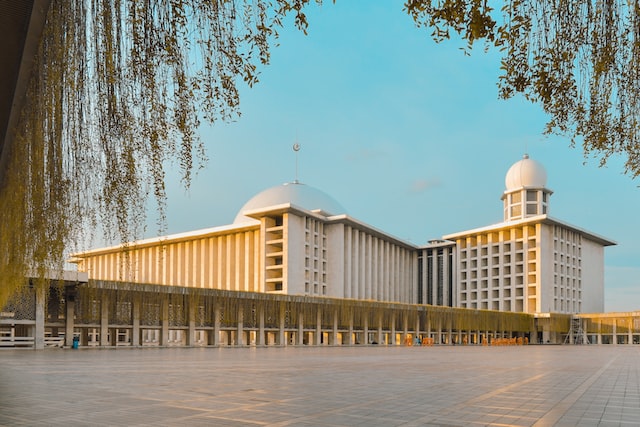 The mosque's main prayer hall is a vast space with a high ceiling and a large
central dome. The dome has a diameter of 45 meters and is supported by 12 columns,
representing the 12 pillars of Islam. The mosque's interior is decorated with marble,
granite, and gold, and the walls are adorned with calligraphy from the Qur'an.