Delicious Rendang
Dish
As a tour guide, I have a good mix of expertise and interpersonal skills when it comes
to interacting with tourists. I research the Indonesian culture, traditions, and attractions
of the interesting location you want to visit. With these steps, I can improve my skills
as a tour guide and allow my passengers to experience an unforgettable journey.

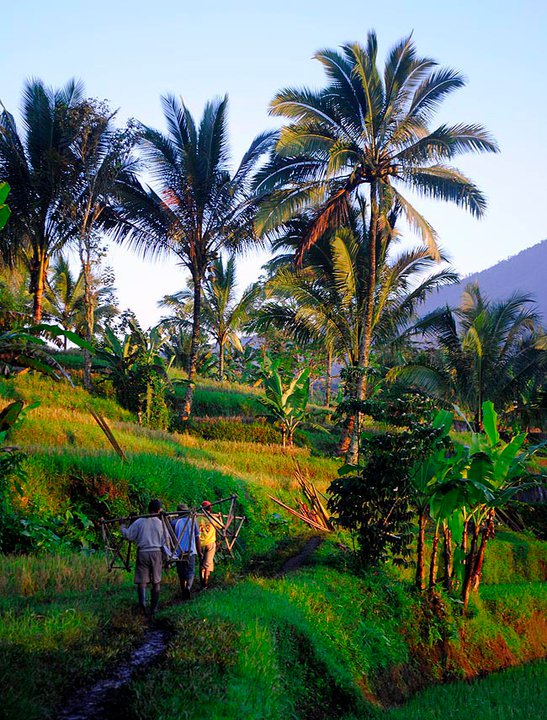
Cocospalm is a term that likely refers to the coconut palm, which is a tropical tree
that grows in many regions of the world, particularly in coastal areas of the tropics.
The coconut palm is known for its large, feathery fronds, its tall trunk, and its
characteristic fruit, the coconut.
Coconuts are used in many ways, including for their edible flesh and milk, as well as
for their oil, which is used in cooking, cosmetics, and other products. The fibers of
the coconut husk are also used for making rope, mats, and other products.
The coconut palm is an important cultural and economic symbol in many regions of the
world, and has been used for centuries for food, medicine, and other purposes.
The trees are often used in landscaping and decorative plantings, and are a popular
subject for artists and photographers.
The coconut tree, also known as the Cocos nucifera, is a tropical plant that is native to
many coastal regions of the world. It is a tall, slender tree that can grow up to 30
meters (98 feet) in height and has a crown of large, feathery leaves at the top.
Coconut trees are known for their versatile uses. The coconut fruit, which is large
and brown, is used for food and drinks, and its oil is used for cooking, cosmetics,
and other products. The husk of the coconut can be used for making rope, mats, and
other products, and the hard shell can be used for making utensils and decorative items.
Coconut trees are also known for their importance in many cultures, where they are
used for medicinal purposes and as part of religious and spiritual practices. They
are often used in landscaping and decorative plantings, and their fronds and leaves
are a popular subject for artists and photographers.
Coconut trees are also important for their role in the environment. They provide
habitat for many species of birds and insects, and their roots help to stabilize
the soil and prevent erosion. Additionally, they are able to grow in sandy soil
and withstand salty water, making them an important plant for coastal ecosystems.
Origin
The origin of the coconut tree is a subject of debate among botanists and historians.
It is believed that the coconut tree originated in the Indo-Pacific region, including
the Philippines, Malaysia, and Indonesia. From there, it spread throughout the tropical
regions of the world, including the Indian Ocean islands, the Caribbean, and parts of
South America and Africa.
Some scholars have suggested that the coconut tree may have originated in South America
and then spread to other parts of the world via ocean currents and human migration.
However, this theory is not widely accepted, and most evidence suggests that the
coconut tree originated in Southeast Asia.
Regardless of its origin, the coconut tree has become an important part of the
culture and economy of many regions of the world, and is widely cultivated in
tropical areas for its many uses.
Padang Sidempuan, 21st January 2023
The Making of Cocopeat
Cocopeat, also known as coir pith, is a byproduct of the coconut industry that is
used as a growing medium for plants. Here are the general steps involved in making
cocopeat:
Harvesting and processing: The outer fibrous husks of mature coconuts are removed,
and the remaining inner shell is soaked in water to soften it. The softened coconut
shell is then broken up and processed to separate the fibers from the pith.
Washing and drying: The cocopeat is washed to remove any remaining fibers or
impurities, and then dried to reduce its moisture content. This can be done
using either natural sunlight or mechanical dryers.
Sieving and grading: The dried cocopeat is then sieved to remove any remaining
large particles or fibers, and is graded according to its particle size and
other characteristics.
Compressing and packaging: The final step is to compress the cocopeat into
blocks or discs, which are then packaged for distribution and use.
The compressed cocopeat is easy to transport and store, and can be rehydrated
with water to create a lightweight, porous growing medium for plants.
Cocopeat is a sustainable and eco-friendly alternative to traditional peat moss,
which is often harvested from sensitive wetland ecosystems. It is also a highly
renewable resource, as it is made from the byproduct of the coconut industry.
Cocopeat is commonly used in horticulture and hydroponics, and is known for its
ability to retain moisture and nutrients while also providing good aeration for
plant roots.
How it grows
Coconut trees are able to grow in a variety of soil types, but they prefer sandy,
well-draining soil. They also require plenty of sunlight, warm temperatures, and
regular rainfall. In general, coconut trees grow best in tropical and subtropical
regions with high humidity.
The coconut tree begins its life as a small seedling, which emerges from the husk
of a mature coconut fruit. The seedling typically takes several years to grow into a
mature tree, with the first coconut fruits appearing after 6-10 years.
Once established, coconut trees require little maintenance beyond regular watering
and occasional fertilization. They are able to withstand high winds and salty air,
making them a popular choice for coastal landscaping.
The coconut tree is also known for its ability to produce new shoots or suckers from
its base, which can be used to propagate new trees. This is one reason why
coconut trees are able to spread quickly in tropical regions, even in areas where
they are not native.
The Making of Coconut Oil
Coconut oil is made from the meat, or copra, of mature coconuts. Here are the general
steps involved in making coconut oil:
Harvesting and shelling: Mature coconuts are harvested from the tree and their outer
fibrous husks are removed. The hard, brown shell of the coconut is then cracked open
to reveal the white meat inside.
Drying: The coconut meat is dried, either by sun-drying or by using a mechanical dryer,
until most of the moisture has been removed.
Crushing and pressing: The dried coconut meat is then crushed or shredded into small
pieces and pressed to extract the oil. This can be done using either mechanical
expellers or by using a hydraulic press. The resulting coconut milk is then separated
from the oil.
Heating and filtering: The coconut oil is then heated to remove any remaining moisture
and impurities. The oil may also be filtered to remove any remaining solids.
Packaging: The final step is to package the coconut oil in bottles or jars for
distribution and use.
Coconut oil can be made using a variety of methods, and the specific process used
can affect the quality and flavor of the final product. Some coconut oil is also
made using chemical solvents or high-heat processes, which can result in
a lower-quality oil. It's important to choose high-quality, minimally
processed coconut oil to ensure that you're getting all the health benefits
of this versatile oil.

Dish

Javanese Culture

Javanese Concept of Harmony

Harmony Life

Agriculture

Tropical Vegetation

20 English Expressions
This website is created by Aoux Swantoro | 2023